Wednesday, April 25, 2012

The Wonders of Genre

Every once in a while, a great genre movie gets made. Matchstick Men was a great genre movie. Panic, several years ago now, was a great one. The Departed, hardly unsung, was another. Speaking of which, my favorite Scorsese film is Cape Fear, and I’m not just saying that to be absurd; that is the ultimate transcendent genre film, a movie that fits completely inside a box that already existed as far as plot and character are concerned, but which explodes with an entirely individual energy. These are movies that make me believe and make me care; their heavy outlines are actually invigorating rather than tyrannical. I troll video stores for these experiences.

I am thrilled that Michael Clayton is such a film- not least of all because I’ve been trying to get Jamie to watch it for quite some time, and she only just gave in and really liked it, proving me to be correct. Michael Clayton is a genre film to the bone, and therefore it could have been absolutely mediocre. It would have been entirely possible to take the same actors and the exact same story and deliver it in a boring, unbelievable and loveless way. State of Play with Russell Crowe and Ben Affleck is a perfect example of a genre film with a good story and a good cast that felt like a complete waste of my time. Convention is a springboard, not a crutch. The plots of these movies aren’t what matters at all, and I have better things to do than watch pretty people deliver banalities.

 
The solitary weak line in all of Michael Clayton comes early, when a reporter hisses “Give me something I can print!” through a phone receiver. After that, there is nary a groanable cliche. It has an assurance to it, a coolness, that reminds me of the feeling of Panic. It has a final showdown that you may actually want to rewind and watch again. It even has a private conversation about manhood between the protagonist and his son that is not only unsaccharine but plausible and affecting, and that has to be absolutely one of the rarest things in the movies.
 
But the best thing about Michael Clayton is that it understands something about the cinema feature form that should hardly be a big secret, but somehow still is. 
 
Consider: it has dawned on the restaurant industry that the most exciting part of a meal is the appetizer course. The main course is usually more predictable and less intense, because you have to eat a lot of it. The appetizer is the chef’s greatest opportunity to be spontaneous and virtuosic. This is why we’re all eating so-called “tapas” and ordering demi-portions of entrees.

Movies are somewhat like this. (Pardon this analogy, but we just came back from a great restaurant.) During the first act of a film, the viewer understands perfectly well that a great deal of exposition will eventually occur, but there is plenty of time for that. The viewer is not yet trapped in the story. This is an opportunity to do something brilliant. There is time at this point for a scene or two in which the story can do something entirely unexpected that will completely perplex the audience. 

 
In Michael Clayton, that scene occurs just before the story jumps four days back in time. I don’t want to describe anything about what happens, because that would ruin some of the magic of stumbling on the scene. The universe of the film seems to be spinning a bit out of control, but there’s nothing to fear, because this is the beginning of the film. The viewer doesn’t mind being lost. In fact, the viewer may very well want to be lost. Why should everything be perfectly explicable if it doesn’t need to be yet? This is the best and maybe only chance for real mystery and confusion, and in cinema, this can be sensory as well; what we see and hear can be just as lyrical and surreal as the apparent story.
The viewer is flung into confusion

Once the gears of the plot are set in motion and we’re 30 or 40 minutes into the story, however, a window has closed; it is now going to be much more difficult to introduce anything that seems entirely tangential, because it will either be too hard to eventually explain, or it will annoy the viewer who at this point doesn’t want to be taken out of the story. Basically, it will rupture what has already been established. Many people claim to dislike the Syd Field school of three-act screenwriting, but it happens to be true that the human brain can only comfortably digest a feature length narrative film if its thrust is consistent; it can be unpredictable, but it can’t completely defy the viewer’s expectations. There are, of course, many highly rewarding masterpieces that lay waste to narrative traditions, and I love some of them to bits, but watching them requires an act of forgiveness on the part of the viewer. Watching 8 1/2 is work. I am much more likely to want to watch La Strada.

Tradition is the very thing that allows films to have such powerful openings. Think about the openings of Eternal Sunshine of the Spotless Mind and Punch Drunk Love. They both have spectacular first acts that hurtle us into deep bewilderment. These are not really genre films, but there is certainly something traditional about both of them; at the very least, they both have heroes fighting for love over three acts. It's the fact that we always feel the story moving forward and can sense a greater structure, even as we are confused, that gives us enough confidence to care, and we are handily rewarded for our faith that we're being guided through some kind of master plan. Without a good solid frame, the early excitement in these stories would have crashed. Think Fear and Loathing in Las Vegas. A whiz-bang opening, and then- meh. So I think our narrative traditions really are essential, and a successful genre film is simply the most dramatic way to remind us of this.  

Sunday, March 11, 2012

The Definition of Insanity

I've heard or read the following enough times now to consider that it's becoming generally accepted:

"The definition of insanity is doing the same thing over and over, and expecting a different result each time."

I'm not sure why this is catching on. You clearly can get a different result each time you do the same thing. (For example, you can get better at it.)

And even if the repeated action is futile and you're foolish enough to repeat it- is that really insanity? What about Charlie Brown and the football? Clearly, Charlie Brown has a problem, and he needs to wise up, get some self respect, and stop listening to Lucy. But is he actually insane for expecting her to hold the football properly for him? Is this the definition of insanity?

Part of the trouble is that a word like "insanity" has no good definition (although we can clearly do better than that one). Like the word "weird," it's used as a desperation device; if you really want to describe something, these words are too subjective and too glib to even bother with. If you find that, nevertheless, you're quite attached to words like "weird" and "insane," a movie like Mondo New York can really help you deconstruct, question, and perhaps dispense with them.

In Mondo New York, which Jamie and I watched on a creaky old VHS tape with our neighbors, we meet a parade of New York City artists of the 80's, and among these is Joe Coleman, who obliges us with the signature move of his early days of performance art: he bites the heads off two live mice that he holds in his hands. He also shouts a kind of obscenity-laced free verse poetry, writhes on the stage with his feet in the air, explodes a package of fireworks strapped to his chest, and runs out of the theater screaming.

Coleman proves to me that there is no such thing as insanity- at least, there isn't a way to categorize people as sane or insane. He behaves in a way that many would describe as "insane," but if you read more about his work and his ideas (his own website is a great place to start), he's trying to get in touch with parts of the human psyche that are inside all of us. As if to acknowledge this, the film later parallels Coleman's performance with a voodoo ceremony in which a priest bites through the neck of a live chicken and, rather horribly, takes blood from its twitching spinal column to mark the foreheads of the worshipers in attendance. There are good reasons to object to animal sacrifice, but it would be lazy to call it "insane," since, as I think Mondo New York shows us (intentionally or not), it's a bit more fundamental to who we are than our daily lives would suggest. Perhaps "insanity" is merely that which is naturally occurring, but so rarely manifested that we find it unpleasant (a greater degree of "weirdness").

Sunday, February 26, 2012

Miyazaki: A Breeze for the "2D" Doldrums

The heroes in Hayao Miyazaki's films are frequently required to negotiate convincing dangers: powerful monsters, cruel villains, sickness, war, and sometimes even environmental disasters and apocalyptic destruction. Yet while he is willing for his characters to get hurt and to hurt each other, there is no true evil in all the fantastical worlds he's created. There are always reasons for bad behavior- greed, for example- that we can see as forces of nature, standing outside of the weak humans they control. Yet a Miyazaki villain is never beyond all hope of casting off these contaminants and becoming relatable, or at least useful to the heroes. So, those who we think are enemies could just as easily be friends, if the heroes catch them on the right day (as demonstrated by the pirate family of Castle in the Sky), and the forces that may bring armageddon (the hordes of Ohmu in the case of Nausicaa) even turn out to be the very things that could protect and nurture the heroes, if afforded due respect.

Not only that, but the people the heroes trust may turn on them. This happens in the beginning of Spirited Away, when the young heroine passes through a strange portal, somewhat like Alice falling down the rabbit hole- except she is led through it unwillingly by her parents, who, once on the other side, gradually forget and abandon her.

So characters are never really "good" or "bad," and in fact, we can't even assume whether the circumstances the characters find themselves in are good or bad, either. I often think of Ponyo, when the world is flooded and the two children are setting out on a merry adventure in a toy boat. Wait- isn't everybody dead, swept away by the water? Well, the kids don't know that for sure, so why shouldn't they make the most of the situation?

And even if everyone is dead- perhaps even death itself is not entirely as it seems to us. Think of the hapless frog swallowed by the spirit with no face in Spirited Away. No Face seems to be a vicious and insatiable monster, and yet later, like a bully who's been cracked like an egg, he reveals that all he's really after is a little sympathy and attention. The frog, presumed dead, is then disgorged, fully conscious and completely unscathed.   

In this way, I tend to string together Miyazaki's films into a grand spiritual lesson: nothing that happens to us really matters as much as we think it does, not even suffering. What matters is that the cosmos itself is benign. Many of his films have god-like protective figures who comfort and reassure children, and this is a wonderful correlative to how the films themselves can affect audiences. When Nausicaa promises the little ones of her village that she will return in one piece after saving the world, they stop crying and believe her. Everything's going to be okay.

The themes of these films have been on my mind for years, but until recently, I never gave much thought to their technical side. I've begun to realize that the character animation is serviceable but typically minimal. A car bumping along a road might be animated on threes or fours (8 drawings per second or even 6); a character in conversation might not move a muscle, other than to move his mouth stroboscopically, for several seconds. I never feel short-changed by this. It's done carefully so that we won't be taken out of the story. No corner is ever cut, yet neither is any energy wasted. It is just what it needs to be and nothing more, and so it rarely calls attention to itself at all.

What is outstanding here is not the action but the design. It seems to me that his films are inspired heavily by graphic novels (he was once a Manga artist, after all), not only in theme and character but in the way the design can tell the story. Totoro is a character that any cartoonist or animator would be proud of; his bulging eyes and toothy grin are easy to draw, and once they spread across his face we understand his whole character immediately. The backgrounds of his films feel lived-in, and are packed with details for sharp eyes. And everything always looks lovely and consistently composed. It's such a delightful style that it's taken me quite some time to notice how economical it is.

The style of character animation born at the Disney studios is a different beast. Miyazaki of course uses the same essential principles that the original Disney animators codified for the first time- anticipatory actions, squash and stretch, exaggeration, and so on- but his acting is not the bombardment of technical flourishes that any great Disney scene is, and is not as obsessive about wringing every bit of feeling out of character action in every scene. Look at the number of things that Bill Tytla's Stromboli does in the blink of an eye, and the fluid, constant redrafting of Milt Kahl's Mr. Snoops (the essence of what separates traditional animation from 3D), and the ballet of secondary actions that Lady and the Tramp perform in Frank Thomas' great spaghetti scene. Every muscle in the characters' faces is articulated. There is more to look at than you can process in one viewing.


The acting in these films is so powerful and expressive that as a kid I was often embarrassed to behold it- ashamed that I could be so easily overcome with feeling by watching a fiction, and I would even shield my face from the strangers I passed on the way out of the theater, in case they might detect that I had been made to blush, or tear up, or even smile.

Disney had a very specific purpose in developing this style: he wanted to create a drama using animated characters, which had never been done before. It was an enormous risk. When the dwarves gathered around Snow White's bier and wept on each other's shoulders, would the audience do something they had never done before and weep along with these characters- or would the scene be ridiculous and laughable? The needs of the story he was telling drove him and his animators to make his technique what it was. Needless to say, they completely succeeded: when Grumpy's face dissolves from resilience to tears, we see the truth in it, and we could never laugh.

As animation grew up, that same style was applied to other powerful visions, and in some cases more innovation was required to serve one film or another. At some point, however, the style seemed to be more the point than the content. Think of The Sword In the Stone, and films from that same era, in which the animators weren't reined in and played out all the funny ideas they wanted to try. Critics considered these sequences- Merlin and young Arthur scrambling around the forest as squirrels, for instance- to be overly long and self-indulgent. I could never complain that these sequences exist- any artist can drool over them- but they do seem to exist for their own sake. Here, the style is the point.

As I get older, I find myself less concerned with technical achievement, no matter what art form we're talking about, and more about cohesiveness and having form and technique follow function in a purposeful way. As dazzlingly emotive as these old Disney scenes are, they would be of little use without the greater purpose they serve. A Disney movie with scene after scene of beautiful animation but no coherent story would be unwatchable. By the way, that's not a hypothetical- rent The Three Caballeros. You'll see.

For a nice counterpoint, think of the Neighborhood of Make-Believe, a triumph of structure following function. Fred Rogers' was the most minimal puppetry of all time. You surely remember that the puppets flapped their hands together as their only means of emphasis. Yet in any episode, the characters might have grappled with anything out of the full range of human emotion- disappointment, confidence, jealousy, sympathy, attraction. To bring these feelings to life, and to encourage children to project them onto the inanimate faces of the puppets, the human actors compensated with some excellent over-acting. This was the design of the show, and it worked great. Here, as with Miyazaki's work, and the earliest of Disney's films, the vision of the storyteller came first, and concerns like medium, style, and technique orbited around that. 

When so-called "traditional" or "2D" animation is mentioned in the news, it is usually to grimly report that the final nail in its coffin may or may not have been driven home. This is as ridiculous as holding a funeral for, say, oil painting. Drawn animation is simply a medium, defined by its own set of possibilities and limitations, and not replaceable by any other medium, certainly not by computer technology. We should not be scratching our heads over the fact that the Studio Ghibli films are the highest grossing films in Japan's history, and yet are "traditionally" animated. The conversation should not swirl so much around these different techniques: which is better, which is more popular. These questions are irrelevant. The very word "medium" is a hot clue that we're talking about something that is supposed to be in between two other things- the audience, and the ideas. If the ideas are good enough, and the artist is intent enough on rendering them in a sensitive and evocative way, then whatever means are employed to do this are the artist's business. Miyazaki is a colossally talented visionary who happens to dream in ink and paint.

Sunday, February 5, 2012

A Celluloid Curio (with the Alloy Orchestra)


It'd been nearly a decade since I'd last seen the Alloy Orchestra when, last night, I attended their presentation of Wild and Weird at the Somerville Theater.

The program was 10 short films of the silent era, most little seen and made by people long gone and little remembered, but here, sweetly, given another chance to delight an audience, and with a treatment by three wonderful performance artists such as they'd most likely never received in life.


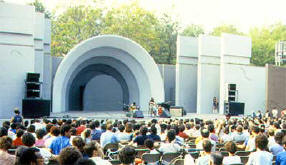
The last time I saw these fellows was in Prospect Park in 2002, when Jamie and I lived in Brooklyn. She, even then my shining star leading me to all the great movies, flashed the news that the Alloy Orchestra would be at the bandshell presenting Speedy, the Harold Lloyd film. I brought along my two roommates and we made a picnic out of it.


In Speedy, Harold Lloyd's father (or was it his girlfriend's father?) is a Civil War veteran who operates the last trolley still pulled by a horse team in Manhattan. Trains whoosh along highlines over his head, and police direct the stream of Fords that zoom past him. With the modern age pressing in on all sides, they have to find a way to protect his business, and hang on to this last shred of the city they used to know.


Yet as we watch Speedy today, of course, and we see Lloyd spin all over 1920's New York, a tour of aching nostalgia that goes from meeting Babe Ruth in the Bronx to visiting Dreamland at Coney Island, it's hard to believe that an earlier time could have been any better.

After Speedy, I was surprised to learn the true size of the Orchestra. We were sitting at quite a distance from the bandshell and I had imagined that a much larger ensemble was responsible for all of those sounds- every police whistle, every car horn, all the rattles and grinds and clattering, not to mention the melodic instrumentation, was produced by three very busy musicians.

Last night, I was much closer to the action. Their music was actually somewhat spare; it never took attention away from the films, and it was frequently possible to forget that the music was live and not simply a soundtrack. Yet it was all graceful and considered, and only occasionally indulged in a moment of "Hey, look at this!"


Yet pointing out neat things to people- things we never would have seen or noticed otherwise- is clearly what they enjoy doing. The program, co-curated by one of the Orchestra members, was like a rummage through buried treasure. One of the films had been digitally reconstructed from two shambling copies; another had been reproduced from a single known print discovered at a junkyard in Mexico. The short subjects, some more narrative and some less, flowed nicely together and evoked a carnival atmosphere. In one, a fly with its wings glued down spins tiny props in its shivering legs; in another, a demon in hell performs magic tricks; in another, a man who has overeaten dreams that his bed is flying above New York. In between films, painted glass slides were presented, reproductions of actual messages to silent era theater patrons: "Ladies, Please Remove Your Hats."

One of the best shorts was a selection from the Dream of a Rarebit Fiend series, drawn by the astonishing Windsor McCay, one of my biggest inspirations in college. In this installment, called The Pet, the husband has a dream that his wife takes in a peculiar stray animal. The animal is an adorable cross between a cow, an elephant, a dinosaur, a dog, a cat, a kangaroo, and, let's say, a horse. It looks like all and none of these animals. Full blown from McCay's mind, it is a clean fabrication of an animal that has never existed, but is drafted so naturally that you can immediately accept it as a real species. It is also very intelligent and endearing. Nevertheless, the husband feels that there's something sinister about the animal, and takes steps to destroy it.


But by far the most incredible piece of work in the collection was The Cameraman's Revenge, made in Moscow in 1912 by the puppeteer (and entomologist) Ladislas Starewicz. His story concerns a married pair of stag beetles, their infidelities, and the subsequent fallout. The entire film was made through stop motion photography of actual dead insects. I was mesmerized by the technique; the idea that the dead bodies of little creatures were made to act out scenes of human emotion, often convincingly, was at once grotesque, heart-wrenching, and even kind of humorous (and the Alloy Orchestra score played subtly to all these things).

Tuesday, January 31, 2012

No Apologies

I have been quite uninspired these last many weeks to write anything on this blog. I was worried that it might have even run its course, as I typically enjoy starting projects and less typically enjoy seeing them through, preferring to allow them to decamp to the part of my brain that is for unfinished things. This is a cubby that I slide open every once in a while so that I can stare at its contents. Sometimes I enjoy imagining that they are all finished. Sometimes I frown at them.

I think this blog should probably have an official end some day instead of just fizzling out. It's hard to imagine doing this beyond, say, my thirties. I can't even imagine who reads this stuff I write. The main reason I do it is that otherwise I would bother people all the time by explaining these opinions out loud to them, whether they wanted to hear them or not. I mean, even more than I do already. The second reason is that I like to look back and see what all I've written in the last several months, and remember what movies I've seen and how they churn in the soup of the memories of my real and active experiences- in other words, how I've measured time by, among other things, the movies I've seen. It's just really comforting for me.

BUT- I have many other things to do, some of them slightly more serious than this. I have a comic book that I started ages ago as a little project that was supposed to take a year and is forever getting put aside. I haven't wanted to be passive. I want to make things right now. So I've been either too tired or too antsy to watch anything that isn't just easy yuks, like "Portlandia," or "30 Rock" (shudder. A little too much of that one). Of course, the Netflix queue is the usual parade of subtitled masterpieces. They will all have to wait. I have passed out in front of, among other potentially great things, two separate films by Andrei Tarkovsky; both were stunning, poetic works of genius, based on what I was able to see in the few minutes before I lost consciousness.

Last weekend, after snoring through 3 Women, the Altman classic, I resolved to do something about this. Jamie, as usual, is the one responsible for the programming (she really knows what she's doing) and she suggested that Bergman's Persona would probably hold many parallels to 3 Women, which she had finished after I nodded off.

So, fortified by weekend sleep, we watched both films (she was game for watching 3 Women again), and sure enough, the connections are uncanny (Altman, in turns out, claimed Persona as inspiration). Both films concern chiefly two women each, with a third, older woman keeping to the shadows. Both have themes of the shifting and loss of identity, perhaps caused in part by a close and stormy friendship. Yet while both stories pulse with danger, Persona merely broods among its possibilities; 3 Women is more vicious and imaginative, and eventually, delivers some kind of payoff (without resolving or explaining too much).

It also reminded me of what often comes up when Altman is the subject of a movie conversation: many are of the opinion that he seemed never to care about his characters, and that this is a big problem. I may have reached a position on this at last. First, whether or not he cared, he was undoubtedly fascinated by his characters. Millie, the heroine of 3 Women, is perceived as bland and irritating by her coworkers and neighbors, and yet it is this exact quality that Altman studies, enraptured; the more boring she is, the more he obsesses over the details of exactly how she is boring. Seriously, who on earth would serve Easy Cheese at a dinner party? It's just kind of amazing.

Furthermore, I would argue that his willingness to put his characters through hell and watch them, perhaps even clinically, as they suffer, doesn't really tell us whether he cares about them or not. I suspect that he saw chaos as the denominator of life, and standing on this principal, refused to throw lifelines to his characters in distress. Can we say how this made him feel? For all we know, he may have laughed evilly- or perhaps he suffered right along with them. The fact that he makes us care is the point of the exercise.

And it is indeed a tiny hell that Millie and her sometimes-friend Pinky must negotiate in 3 Women. The hell is built from three or four locations, a lot of unpleasant people, and a score full of slanting dissonances that is somewhere between Bernard Hermann and the Jonny Greenwood score for There Will Be Blood. Everyone in the story seems trapped in this shifting and forbidding microcosm. Sometimes it's even terrifying. There is a nightmare sequence late in the film that is the best I've ever seen at capturing the feeling of actually waking, too slowly, from a nightmare- when, as Stephen King once wrote, your bed is "a lake of rancid dreams." Jamie experienced it in the dark late hours, the only one awake in the house.

Any movie that can be this intense and yet escape classification and most attempts at a summarization is a home run in my book. I will at least say that, like most Altman films, this is a story of survival- some can, and some can't. Find out for yourself who does.

Sunday, November 20, 2011

Has It All Been Done Before?

A student of mine said he feels as though every movie plot has already been thought of and made- and then he qualified that, saying that it's still possible to write something original, but that increasingly, you've got to come up with unexpected and absurd ideas in order to do that.

I almost wanted to agree with him, because in that moment I forgot the truth that a movie like Terri can bring roaring back to you: plot is not necessarily equivalent to subject matter, and that for the latter, our small lives are inexhaustible.

Terri didn't have to squeeze, wring or scrape to get novelty out of its premise. It didn't have to turn life on its head or pose some fantastical "what-if." It simply observes reality, and not even in a way that I would call particularly wry or cockeyed- it's patient, sharp, and empathetic, and that's enough. Not only does it feel utterly original, it leaves you thinking that if this is the kind of movie that can be made in 2011 using nothing other than daily life as its raw material, the well of cinema could never run dry.

It defies convention not merely to be defiant, but out of joy, because it can't help but find things in our world to point to that are never pointed to. When the two men on skateboards rolled past Terri, what did you expect them to say to him? What did you think that scene was going to be about? And how much better- and how much more delightful and real- was the actual scene than the scene you thought you were going to get?

There was hardly a scene that helped you predict what was going to follow it, hardly a line that you could anticipate. Some of the dialogue is almost violent in its terse and unexpected impact. And a sequence late in the film, in which the young leads are alone together, hums with a kind of terror, as the possibilities in the situation multiply but refuse to promise anything.

Why couldn't this have played to a wider market? Was it really so opaque, so obscure? Was it suspected that most people couldn't relate to it? Why did Juno make it to more than a dozen screens and not this? Not snarky enough? Seriously, I had to wait until it came to my local Redbox in order to watch it. It played in exactly 0 theaters within 100 miles of Boston. Come to think of it: if there was no market anticipated for this film in the entire city of Boston- not even at (I hold my nose as I write the phrase) "art house" theaters like Coolidge Corner- why is it now considered worthy to sit in the Redbox machine at the grocery store next to Captain America and The Green Lantern?

Well, what am I complaining about anyway- watching this at home with mushroom ziti from our Al Forno cookbook was one of the many highlights of this past weekend, along with:

- doing sit-ups on the cold ground in Prospect Hill Park with hawks wheeling around the tower
- intense conversations about future plans, including our next summer adventures
- pie, coffee and grading at the corner cafe
- shopping for vintage clocks in Harvard Square
- reminiscing in an Inman Square bistro
- long phone calls with friends and family
- tormenting the cat (with affection).

Saturday, October 8, 2011

Movies We Saw in Spain

We recently discovered that not all of Spain actually stays out late every night. In San Sebastian, the party continues after 2 am on a Saturday, but the rest of the week it's just not that jumping of a place (not for Spain, anyway).

It was one of our nights of cruising the old town for 3 euro foie gras and chocolate ganache. Once we left the clatter and shouting of the pintxo bars behind us, there wasn't much of a scene happening in the streets, not like the throngs we'd rolled our baggage through on the night of our arrival. Plus, Jamie had presented her research earlier that day at the International Conference on the Image and was a little tired. So, we wound up back in the hotel room at a reasonable hour and flipped on the tube.

The "la Sexta" network affiliate was showing a double feature: Game of Death and Dragons Forever (both dubbed in Spanish, of course).

I hadn't seen a Bruce Lee movie since I was a kid. Enter the Dragon was a big deal for me because it was the first movie my parents let me watch that was rated R. I still remember how excited I was- and how disappointed I was that I wasn't shocked by it, that nothing much in it seemed to be out of the bounds of movies I had already seen. I had considered the R rating a pretty clear advertisement that something in the film was going to be too advanced for my tender psyche, but no.


I had no memory to prepare me for how ridiculous Game of Death was. The fight with Kareem Abdul-Jabaar could have been in an episode of Batman. Once again I feel hoodwinked. All this time I'd assumed that something with a title like Game of Death was going to be frightening or intense somehow. Yet it's silly, and in a way that could only have been intentional. It was nice, though, to finally see the yellow track suit that has such a legacy.

Then it was time for Jackie Chan.


When it comes to Jackie Chan, you know what you're going to get, but some of his films are better than others. Dragons Forever seems like it was one of his best. The acting is so broad that we were able to follow the story despite the Spanish dubbing. The situations are hilarious, and the action is thrilling; this clip only gives you a taste of what comes later, when the stunt work looks so dangerous I'd be surprised if nobody broke any bones. Maybe I just need to watch more Bruce Lee, but it seems like Jackie Chan's best material has Bruce Lee beat.

Later, in Barcelona, we saw a very late showing of Pina, and I'm afraid my eyes were drooping behind my 3D glasses. But it was a wonderful reminder of the time Jamie and I saw Full Moon at the Brooklyn Academy of Music. Many of the dancers in that performance also appeared in the film, and after spending so much time watching them in that show and memorizing their faces, it was nice to see their 3D selves hovering in front of us. I value the memory of that show at BAM because it was a truly affecting performance. On at least one occasion I was surprised to be overwhelmed with understanding and emotion; a line that a dancer yelled out at the audience several times, while he performed a sweeping, spinning gesture, shook me to the bone. And I remember how tired the company was at the end of the performance. They were drenched with the cold water that had been raining down on the set, and they had leapt, kicked and writhed, sometimes with incredible athleticism, for two hours. They faced the audience for their bow and they looked simply brutalized. That might have been the most powerful moment of the show, because you could see so clearly what the art meant to them.